


.png?width=750&height=288&name=Copy%20of%20Copy%20of%2024%20Hour%20Turnaround%20Case%20Study%20Banner%20(2).png)
ISO Codes measure oil cleanliness. They reflect how many particles are circulating in your system.
Particles circulating in oil can damage pumps, valves, and actuators, increasing maintenance costs. Contamination is the leading cause of premature hydraulic component failure. Monitoring fluid cleanliness with ISO 4406 codes can allow reliability teams to extend component life and take action before damage occurs.
What Are ISO 4406 Cleanliness Codes?
ISO 4406 is the international standard for classifying fluid cleanliness based on the number of solid particles in hydraulic and lubrication oils. It uses a three-number code, making it easier to compare fluid cleanliness across systems and set targets for contamination control.
Why it’s widely used:
- To evaluate hydraulic and lubrication fluid condition
- To determine filtration effectiveness
- To set cleanliness targets to protect sensitive components
How to Read ISO 4406 Codes
.png?width=357&height=446&name=Copy%20of%20ISO%20Codes%20Carousel%20(1).png)
An ISO code looks like this: 19/17/14.
ISO 4406 cleanliness codes represent the number of particles per mL of fluid at three sizes: ≥ 4 µm, ≥ 6 µm, and ≥ 14µm. For example, a code of 19/17/14 means there are:
- 2,500-5,000 particles ≥ 4 µm
- 640-1,300 particles ≥ 6 µm
- 80-160 particles ≥ 14µm
The higher the number, the more particles are present in that category.
ISO codes are logarithmic, meaning each increase in code number represents roughly double the number range of particles.
For example, moving from a code of 18 to 19 at the ≥4 µm(c) level means the number range of particles has doubled, which is a significant increase in contamination risk.
.png?width=358&height=448&name=Copy%20of%20ISO%20Codes%20Carousel%20(2).png)
Why ISO Codes Matter
Even microscopic particles can cause significant damage, like:
- Increased wear on pumps, valves, and actuators
- Reduced system efficiency and reliability
- Higher fluid replacement and disposal costs
- Shorter equipment life and unplanned downtime
.png?width=6000&height=755&name=FY%2025%20updated%20version%20marketing%20(2).png)
Monitoring ISO codes can allow your team to take proactive maintenance actions to prevent failures.
Setting Target ISO Codes for Your Equipment
Targets depend on different factors:
- Component sensitivity (servo/proportional valves need cleaner oil)
- System pressure (high-pressure systems require stricter cleanliness)
- Operating environment (dusty or harsh conditions require stricter control)
Donaldson Hy-Pro Recommended Targets
Hydraulic component and bearing manufacturers set ISO code limits.
These limits are the maximum tolerance for fluid contamination under which predictable equipment performance and life can be maintained. Using the upper limit target means that you are operating with no room for error.
Based on our experience, Donaldson Hy-Pro goes beyond generic OEM limits.
For example, our purpose is not to hit a valve manufacturer's ISO code limit but to help our customers reduce servo valve replacements from 220 in one year to 6 in the next by implementing lower operating ISO codes and drastically reducing component wear and failure.
⬇️ Download our ISO Code Cheat Sheet to see Donaldson Hy-Pro recommended cleanliness targets for common hydraulic equipment.
What's Next? Achieving and Maintaining Target ISO Codes
Once you understand ISO codes and targets, you can take actions to meet your goals. Simply installing a filter isn’t enough. We recommend these 5 steps:
1. Upgrading filter elements: High-efficiency DFE elements capture more damaging particles.
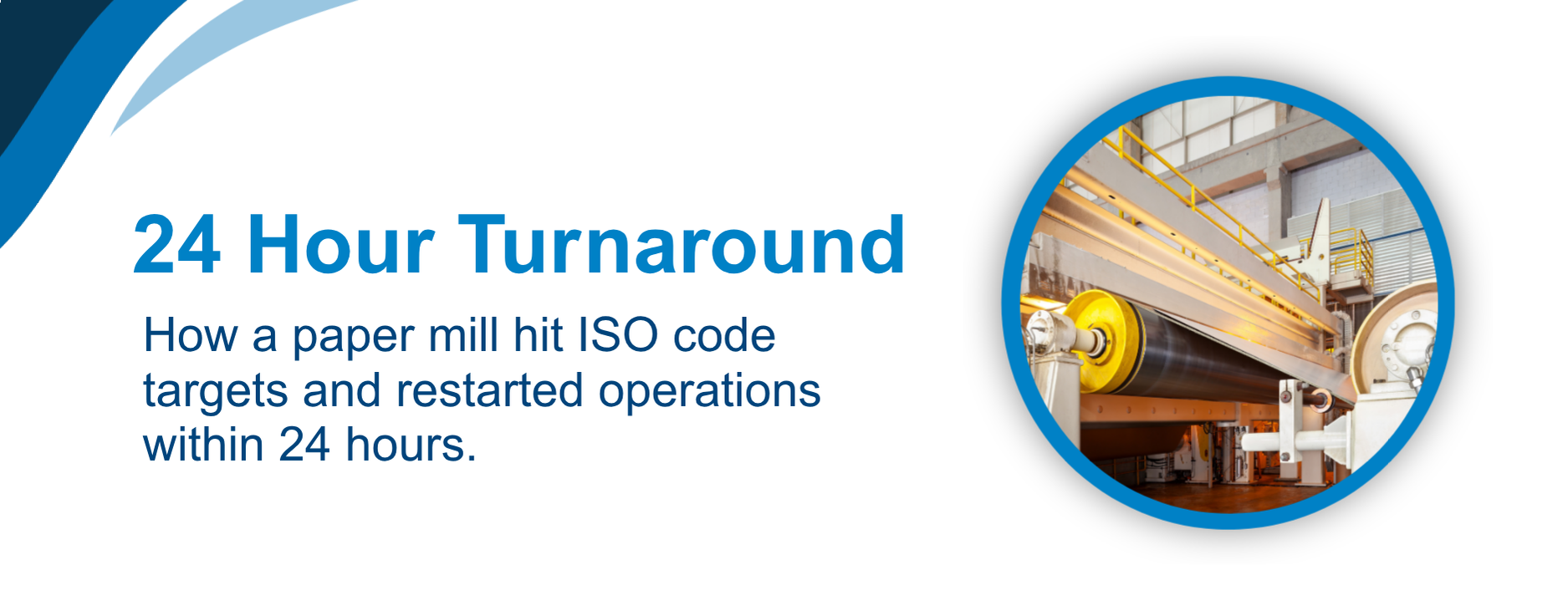
In our recent case study, A U.S. paper mill faced a shutdown when its lube oil reached ISO 19/18/15, too contaminated to safely restart. After installing Donaldson Hy-Pro high-efficiency filter elements, the system dropped below target ISO codes in just four hours, and production resumed within 24 hours of placing the order.
🔎 Read the full case study here
2. Correct filter placement: Position filters where contamination is most harmful.
3. Utilize the correct breather: Most systems have inadequate filtration as it pertains to the air
transfer on the reservoir, allowing containment and moisture to enter the system
4. Regular oil sampling: Trend ISO codes over time to detect issues early.
5. Proactive maintenance: Clean new oil before it enters the system.
Frequently Asked Questions
Q: What does ISO 4406 mean?
A: It’s the international standard for classifying oil cleanliness based on particle counts at 4, 6, and 14 microns.
Q: How do I read ISO cleanliness codes?
A: Each number (e.g., 18/16/13) represents particle count ranges for >4µm, >6µm, and >14µm.
Q: What are common target ISO codes for hydraulics?
A: Sensitive equipment like servo valves: 16/14/11 or lower; less sensitive systems may tolerate higher codes.
Q: Why are three particle sizes used?
A: These sizes represent particles most responsible for wear and failure.
Q: How can I lower my ISO cleanliness code?
A: Use high-efficiency filter elements, remove contamination from new oil, and monitor particle counts regularly.
About Donaldson Hy-Pro:
Donaldson Hy-Pro offers a wide range of hydraulic filtration solutions that can help you improve the performance of your machinery. Our filter elements are designed to combat dirt, water, and oxidation by-products, to help keep your systems running at peak performance.
If you're looking for a way to reduce filter expenses, improve oil cleanliness, and extend the life of your equipment, Donaldson Hy-Pro can help. Contact us today to learn more.